


The Freedom From Religion Foundation 2026 student essay competitions are now closed.
Information on FFRF’s 2027 student essay competitions will be announced in March 2027.
Information on FFRF’s 2027 essay competition for law students will be announced in November 2026.
Thank you for your interest in our student essay competitions!
THE 2026 WINNERS OF THE STUDENT ESSAY CONTESTS:
- David Hudak Memorial Essay Contest for Freethinking, First-in-the-Family College Students – Winners will be announced soon.
- William J. Schulz Memorial Essay Contest for Freethinking College Bound High School Seniors – Winners will be announced soon.
- Kenneth L. Proulx Memorial Memorial Essay Contest for Freethinking Ongoing College Students – Winners will be announced soon.
- Cornelius Vander Broek Memorial Essay Contest for Freethinking Graduate/”Older” Students (to age 30) – Winners will be announced soon.
THE 2027 ESSAY CONTESTS WILL BE ANNOUNCED IN MARCH.
THE 2026 WINNERS OF THE ESSAY CONTEST FOR LAW STUDENTS:
THE 2027 ESSAY CONTEST FOR LAW STUDENTS WILL BE ANNOUNCED IN LATE 2026.
2026 David Hudak Memorial Essay Contest for Freethinking, First-in-the-Family College Students
Winners will be announced soon.
2026 William J. Schulz Memorial Essay Contest for Freethinking College-Bound High School Seniors
TOPIC: My favorite freethought/humanist hero/ine.“The world would be astonished if it knew how great a proportion of its brightest ornaments — of those most distinguished even in popular estimation for wisdom and virtue — are complete skeptics in religion.” — John Stuart Mill
PROMPT: Studies show that nonbelievers are still at the bottom of the social ladder when it comes to social acceptance. Many Americans don’t realize how many activists or achievers they admire are not religious. To help educate them, write a personal essay about your favorite freethinker or humanist and what they did or are doing to improve or enrich our lives. It might be a nonreligious scientist, an artist or writer, a reformer — or an everyday person in your life who has made the world better and inspired you. Please briefly explain their influence or accomplishments and briefly document their nonreligious views. Tell us what they have meant to you as a humanist and nonbeliever. For quotes or citations, please document using links or footnotes.
Winners will be announced soon.
2026 Kenneth L. Proulx Memorial Essay Contest for Freethinking Ongoing College Students
TOPIC: Why Trump is wrong that ‘you just can’t have a great country if you don’t have religion.’
PROMPT: Write a first-person essay that makes the case about why President Trump is wrong to claim that “you just can’t have a great country if you don’t have religion.” Choose one or more such quotes by Trump (citing them in your essay) and show why his claims are fallacious. You may wish to marshall evidence or history that contradicts Trump’s claims, or address how his words threaten state/church separation and religious freedom. Save room to include something about your own reaction as a nonbeliever to such pronouncements by the president. Include links or footnotes for quotes or major citations.
Winners will be announced soon.
2026 Cornelius Vander Broek Memorial Essay Contest for Freethinking Graduate/”Older” Students (to age 30)
TOPIC: “Why the 250-year-old United States of America is not a Christian nation.”
PROMPT: Research and write an essay documenting why the U.S. government is not based on God or Christianity. Refute the claim by President Trump and others that the 250-year-old Declaration of Independence proves that our government is based on God. Include and refute a few other timely examples of legislators, public officials or other individuals promoting the Christian nation myth. Save space to include your own thoughts on why you find “Christian nation” propaganda and disinformation dangerous to our democracy and also how you feel about this as a nonbeliever. Include links or footnotes for quotes or major citations.
Winners will be announced soon.
2026 Diane and Stephen Uhl Memorial essay competition for law students
The Freedom From Religion Foundation is proud to announce the three winners (and two honorable mentions) of the Diane and Stephen Uhl Memorial Essay Competition for Law Students.
FFRF paid out a total of $10,000 to the winners of this year’s contest.
TOPIC: Analyze how the principle of “parental rights” has changed. In 2025, the Supreme Court extended Wisconsin v. Yoder (1972), citing it repeatedly in Mahmoud v. Taylor, where the court sided with religious parents who objected on religious grounds to public school instruction that included books with LGBTQ themes or characters. Analyze how the principle of “parental rights” changes from Yoder to Mahmoud. What other constitutional or societal interests might conflict with this expanded understanding of parental rights in the First Amendment context? Discuss how the court could or should balance these competing interests in future cases.
Here are the winners:
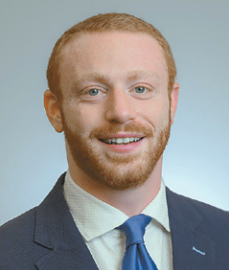
First place: Sam Foer, Washington & Lee University School of Law, $4,000
The collapse of a constitutional boundary
by Sam Foer
Introduction
In 1972, in Wisconsin v. Yoder, the Supreme Court carved out a narrow but profound exception to compulsory education laws. Amish parents could withdraw their children from public high school not because they objected to a lesson or two, but because the state’s entire educational project threatened to dissolve their religious community’s way of life. Fast forward to 2025. In Mahmoud v. Taylor, the Supreme Court faced a very different kind of question: Do religious parents have a Free Exercise right to opt their children out of specific lessons depicting LGBTQ+ families? The court granted the opt-outs.
Read more of Sam’s essay in Freethought Today
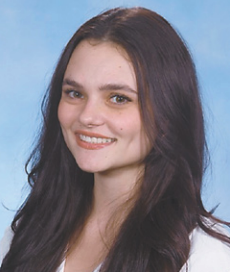
Second place: Zoe Schacht, Brooklyn Law School, $3,000
Preferential ‘veto’ power
by Zoe Schacht
In the public school setting, the principle of “parental rights” has evolved from being a quasi-no-exemption rule to a preferentially treated “veto power.” This expanded understanding of the parental right to object to public school curricular or educational requirements on religious grounds creates potential tension with other constitutional or societal interests, such as the assertion of parental rights in nontraditional and progressive settings, the right to free exercise by non-conservative religious believers, and LGBTQ+ rights, generally. In future cases, the United States Supreme Court is unlikely to have a universal approach in navigating these competing interests. While it is unlikely to do so, the court should give this new “veto power” a leg to stand on and protect the parental right to raise children with the “beliefs and practices [they] wish to instill,” even when those beliefs and practices diverge from traditional, conservative values.
Read more of Zoe’s essay in Freethought Today
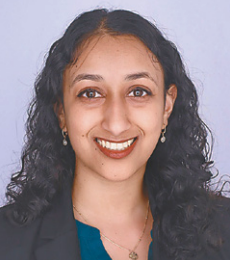
Third place: Ashni Verma, New York University School of Law, $2,000
The battle for curricular control
by Ashni Verma
Introduction
On June 27, 2025, the Supreme Court decided Mahmoud v. Taylor, granting parents in a Maryland school district the right to excuse their children from lessons that engage with storybooks about the LGBTQ+ community. This essay explores the development of hybrid parental rights claims and identifies strategies for schools to maintain their commitment to multicultural, inclusive curricula in the wake of Mahmoud.
Read more of Ashni’s essay in Freethought Today
Honorable mentions:
Wesley Michael Harris, Florida A&M College of Law, $500
Maya Gardner, University of South Carolina, Joseph F. Rice School of Law, $500
All eligible entrants of any student essay competition receive a digital year-long student membership in FFRF.
FFRF appreciates its members who make the effort to contact local high schools, colleges and universities to help publicize its competitions.
FFRF has offered essay competitions to college students since 1979, high school students since 1994, grad students since 2010 and one dedicated to students of color since 2016. A fifth contest, open to law students, began in 2019.
“FFRF is happy to see another generation of freethinkers raising their voices in protest against the continuing threat of Christian nationalism,” says FFRF Co-President Annie Laurie Gaylor. “The next generation promises to have the greatest population of freethinkers yet, and FFRF is proud to lend its support to keep student advocacy alive and thriving.”
The Freedom From Religion Foundation is a U.S.-based nonprofit dedicated to promoting the constitutional principle of separation between state and church and educating the public on matters of nontheism. With nearly 42,000 members, FFRF advocates for freethinkers’ rights across the globe.
The post 2026 Student Essay Competition Results appeared first on Freedom From Religion Foundation.




Leave a Comment
You must be logged in to post a comment.